
How to Design Lighting for Museum Display Cases
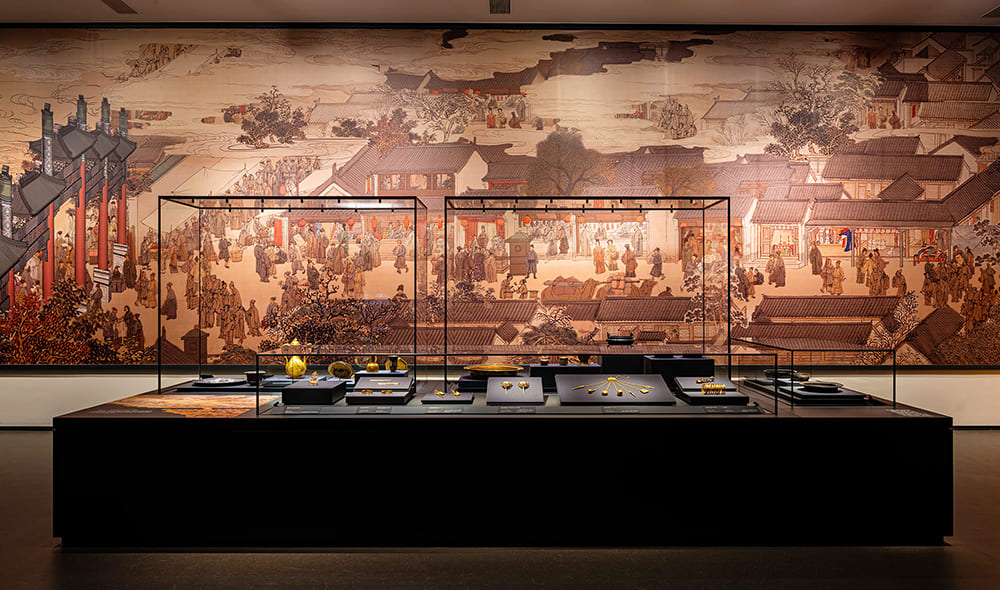
Museum display cases are freestanding, touchable structures. To comply with engineering safety standards, the lighting inside these cases should operate on low-voltage input. Relicase, in line with national standards, ensures the display cases they manufacture meet the following specifications:
1. Protective or isolating measures must be in place between the lighting fixtures and the display space, while also allowing for easy maintenance.
2. For track lights without physical isolation, the input voltage should be at a Safety Extra-Low Voltage (SELV).
3. Under normal working conditions, the surface temperature of the lighting fixtures should not exceed 45°C.
4. The lighting fixtures should be easy to install and maintain.
Safety is the top priority when it comes to display case lighting.
Since frequent opening of display cases can pose a risk to the artifacts, the lighting fixtures must be both easy to install and maintain.
As a premium museum showcase supplier, Relicase has considered various factors over the years when selecting lighting fixtures for its display cases. These factors include artifact preservation, visitor visibility, scene setting, cost-effectiveness, and ease of maintenance for museum staff.
Types of Display Case Lighting
Display case lighting can be categorized into diffused lighting, wall washing, uniform projection, and accent lighting.
Below is an overview of the primary lighting techniques used by Relicase:
– Illumination Design: The design focuses on primary and secondary light levels to create a layered brightness hierarchy.
– Harmonious Atmosphere: Lighting integrates seamlessly with the exhibit to create a harmonious spatial ambiance.
– Uniformity: For flat exhibits, light uniformity should be ≤0.8.
– Contrast: The ratio of background to accent lighting should range from 1:3 to 1:5.
– Adjustable Brightness: Lighting should offer smooth, flicker-free dimming from 0-100%.
– Anti-glare Design: The arrangement and angle of the fixtures should minimize glare, with a Unified Glare Rating (UGR) below 19.
– Distance and Angle: The horizontal distance between lighting fixtures and artifacts should be in a ratio of 1:3, with the projection angle between 30° and 45°.
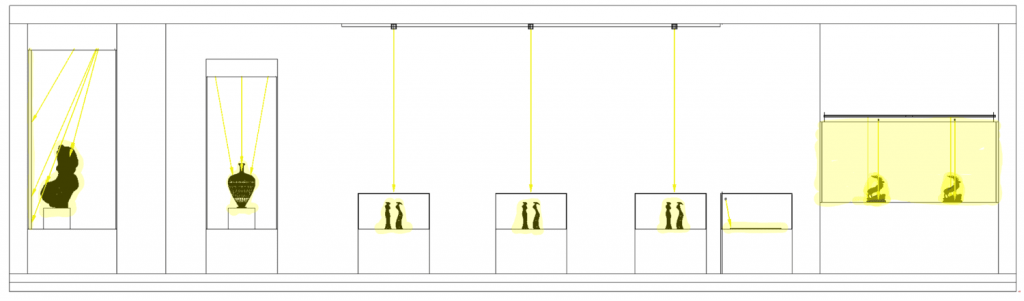
Lighting illumination simulation of all kinds of display case
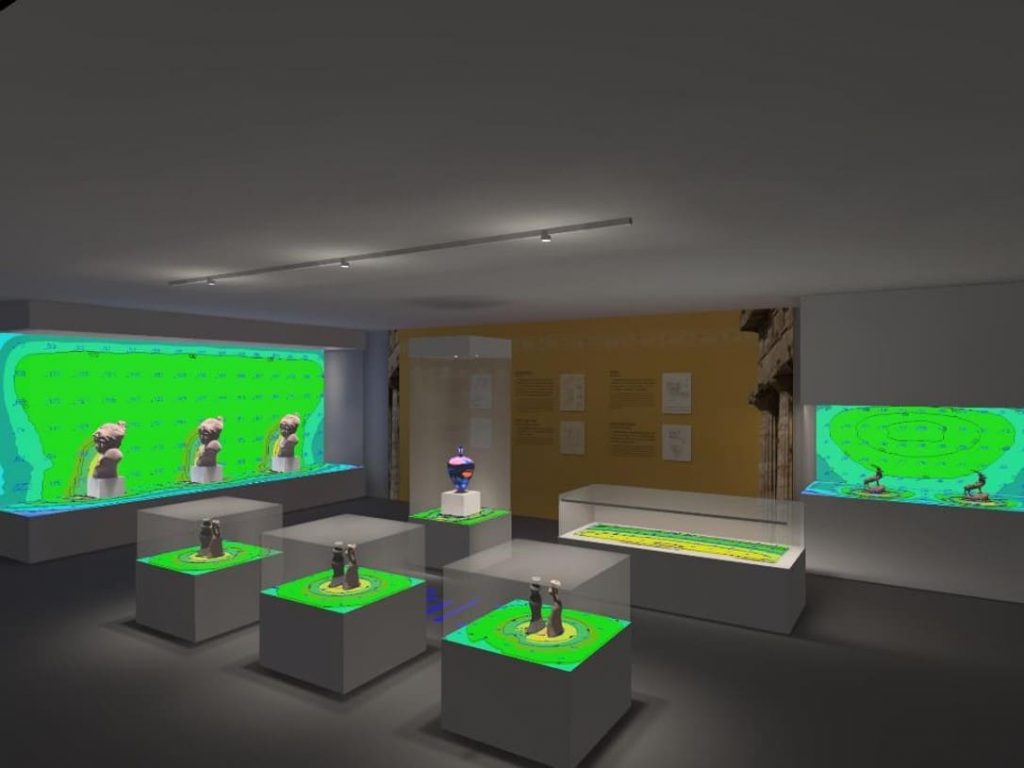
Display Case Lighting Examples
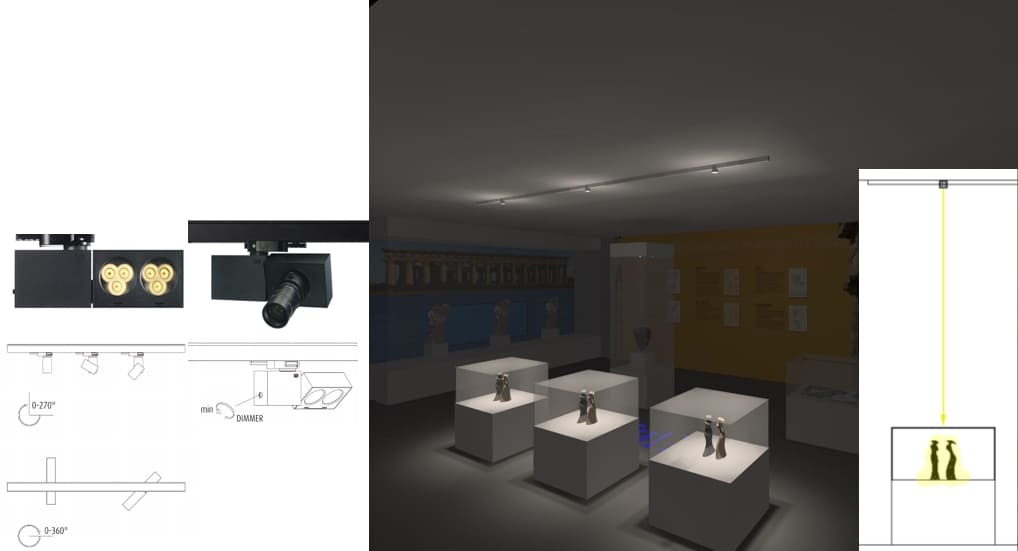
– Freestanding Display A:
Features up to five interchangeable lighting effects using lens replacements. Combined with zoom functions, the lighting can be mounted in recessed, stand-mounted, or magnetic installations.
It quickly adapts to different exhibit sizes without needing to change the entire fixture—offering convenience, efficiency, and environmental sustainability.
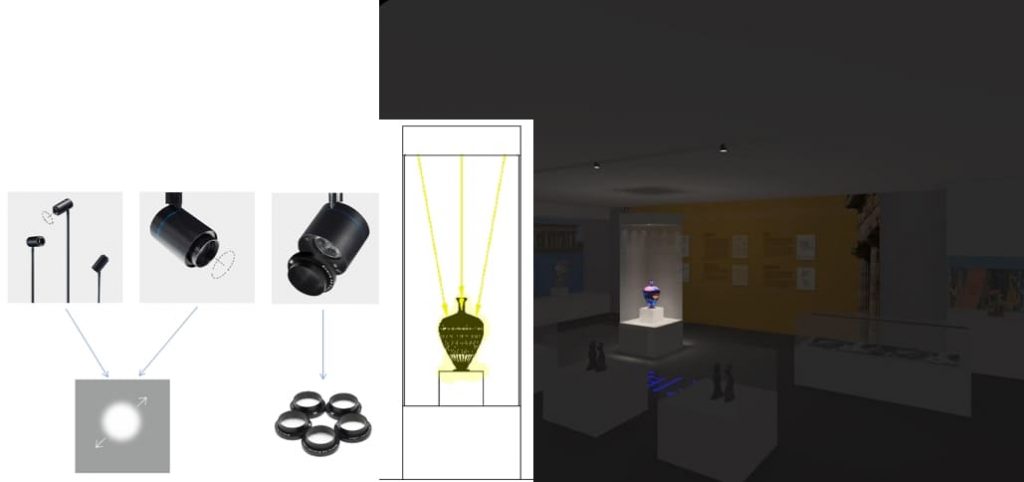
– Freestanding Display B:
Offers the world’s most compact integrated museum track lighting, mounted flush to the ceiling.
It comes with eight beam angles—6°, 9°, 16°, 26°, 47°, 54°x24°, 24°x54°, and a wall-washing option—six of which are easily interchangeable.
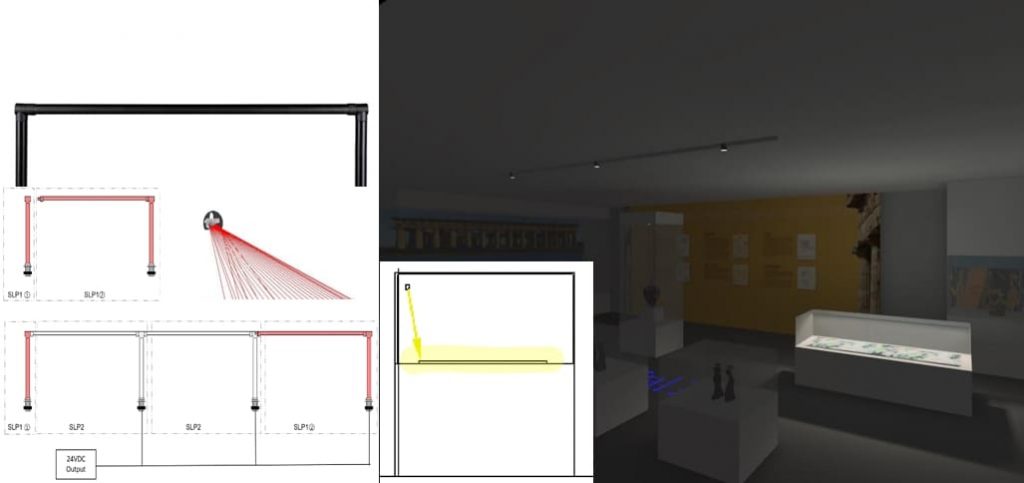
– Table/Flat Display Lighting:
Features sleek designs with fixtures made from extruded aluminum. The fixture height and direction are adjustable to accommodate the table size and exhibit needs.
It supports modular LED lighting with anti-glare features and multiple dimming options, with flexible mounting methods like stand or ceiling-mounted installations.
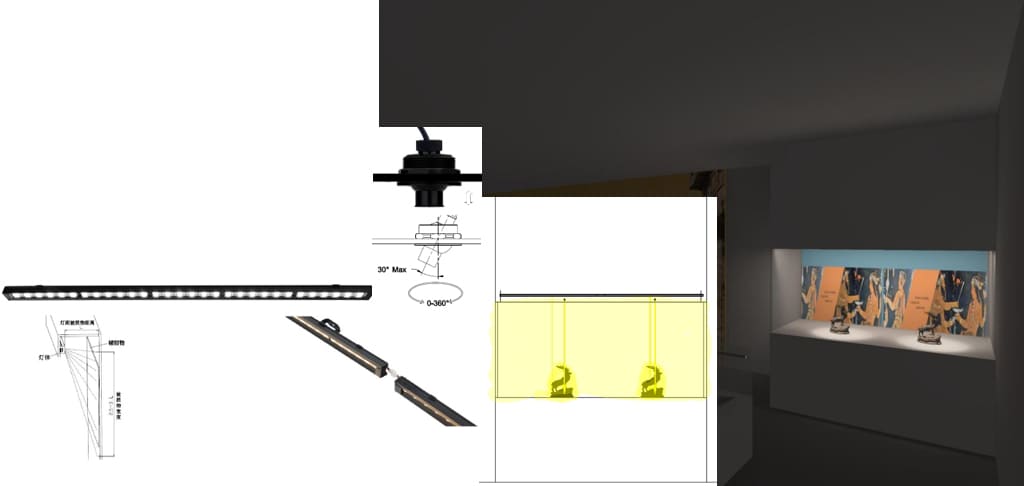
– Wall Display Lighting A:
– Accent Lighting: Compact and sleek, equipped with SUBROSA anti-glare technology and an adjustable optical focus design, this lighting easily adapts to the characteristics of the exhibit to meet various display requirements.
– Wall Washing Lighting: The linear fixture is compact and made from extruded aluminum, with various lengths available. It comes with built-in LED modules for consistent, linear wall-washing lighting.
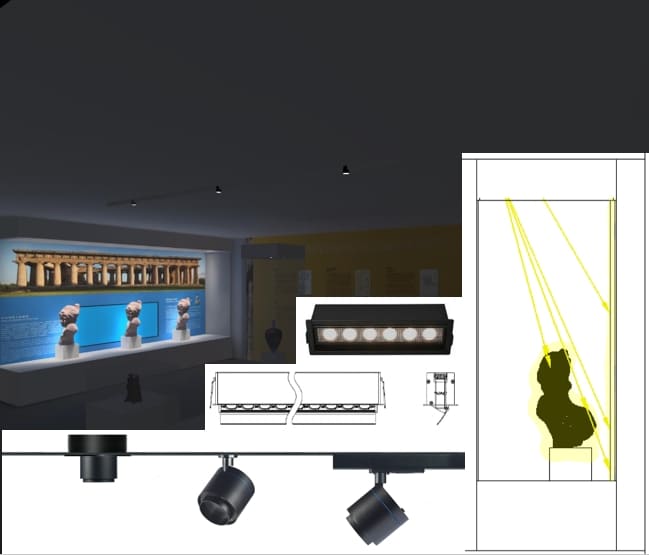
– Wall Display Lighting B:
– Accent Lighting: Features interchangeable lenses for up to five lighting effects, with a zoom function for different mounting methods—recessed, magnetic, or track-mounted. This allows for quick adaptation to different exhibit sizes without replacing the entire fixture.
– Wall Washing Lighting: Sleek design with precise optics, allowing easy adjustments to achieve the desired wall-washing effect for the exhibit or display case.
Achieving Optimal Lighting
To achieve the best lighting design, it’s essential to collaborate with architects, exhibition designers, lighting designers, and our technical team. Expert advice will help you make informed decisions that highlight key exhibits while preventing damage from light exposure. Combining accent and background lighting, with careful attention to both illumination and brightness, creates a comfortable viewing experience that reduces visual fatigue.
Currently, a combination of uniform wall-washing and accent lighting is the preferred approach, offering excellent results though it may come at a higher cost. When setting up lighting inside the display cases, the height of three-dimensional exhibits should not exceed 3/4 of the case’s internal height, and the distance from the exhibit’s outer edge to the case wall should be at least half the case’s height. For vertically displayed items, the depth of the display case should be at least one-third of the exhibit’s height.
Relicase Expertise
Display case lighting is one of the more challenging aspects of exhibition lighting due to the wide variety of case types.
As China’s leading professional museum showcase manufacturer, Relicase offers expert design and manufacturing capabilities. With years of experience working with domestic and international design firms, museums, galleries, and major expositions, we are your ideal partner in achieving your exhibition design goals.
More Articles
Relicase Debuts at AAM Philadelphia: Showcasing Chinese Intelligent Manufacturing, Connecting Cultural Landmarks
From May 20 to 23, 2026, the 2026 Annual Meeting & …
Relicase: Exhibit in Dubai, Engage with the world.
On November 12th 2025, the 27TH ICOM GENERAL CONFERENCE…
Museum Showcase Excellence: How Relicase Brought Ancient Shu Treasures to 300,000+ Visitors
Over 300,000 Visitors!Ancient Treasures of Shu Shine in…
Relicase at Macau Museum: Safeguarding Heritage, Celebrating Legacy
Macau Museum: “Edification of the Masses — Cultur…
Potala Palace
Abstract On April 26, 2017, Relicase completed the show…
Porcelain Tower of Nanjing
Abstract The Porcelain Tower of Nanjing, named and cons…